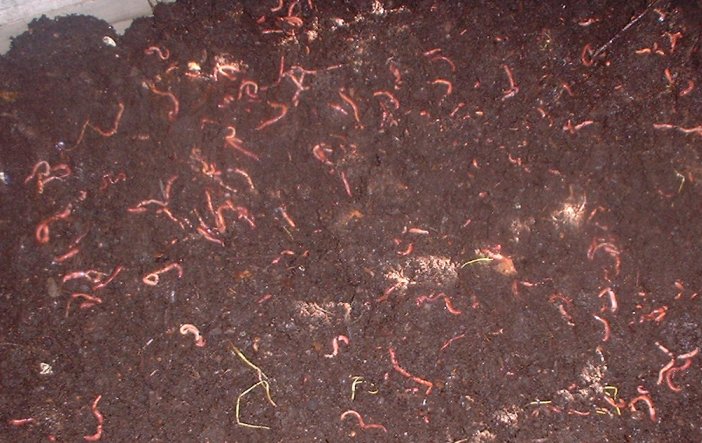
Composting changes organic kitchen waste and almost any other vegetable waste, together with manure, into a crumbly loam like material that is able to bring nutrients, bacteria and organic matter to the soil for providing plant nutrition.
Home composting of domestic waste and kitchen scraps etc is created by composting organisms that require the balancing of four principles:
Carbon [C] products that are oxidised by microbes to create considerable heat energy.
- Nitrogen [N] is needed to produce more microbes to oxidize the carbon.
- Optimum C:N ration 30:1 producing heat energy in the order of 160oF [70oC]
- High nitrogen materials are usually living, wet and green coloured.
- Oxygen [O] is required for oxidizing the carbon for the decomposition.
- Water [H2O] controlled to keep the process active, but not sodden.
The optimum C:N ration of 30:1 will cause beneficial microbes to heat up the compost pile. Water will be released as vapour. Oxygen will be depleted unless the compost pile is managed properly. The air-water balance is necessary to keep high temperatures that cause the materials to be broken down and weed seed destroyed. Too much air or water will slow the process and so too will the loss of balance in the C:N ratio.
Fresh grass clippings have an average ratio of about 15 to 1 and dry autumn leaves about 50 to 1. Mixing equal parts by volume approximates the ideal C:N range
Materials that are primarily carbon:
- Dry straw-type material, such as cereal straws and corn stalks
- Dry leaves shredded
- Fine Wood shaving, sawdust or ground wood waste - avoid compaction so mix with other materials
- Paper and card board preferably unprinted. Paper will decompose very slowly so add in small quantities with other material.
Materials with high nitrogen content include:
- Green plant material: Crop residues, new shoots, small amounts of hay , alfalfa, grass clippings and weeds.
- Manure with straw: from poultry, pets, and herbivorous animals such as horses, cows.
- Kitchen waste: fruit and vegetable cooked vegetable waste and trimmings, juicing-pulp residue, tea and coffee grounds, meat, egg shells.
- Mix the materials [as small as possible] to increase the rate of decomposition in alternating 15cm layers (6 in). Good garden loam or some of the material from a previous compost heap can be added to start with to speed up the pile by introducing beneficial soil microbes. Lime is usually not necessary.
When carbon is inadequate for converting available nitrogen into protein, the organisms release excess nitrogen as ammonia. Ammonia release causes a loss of nitrogen and a consequent loss in fertile compost.
Plant material is made up largely of the following:
- Sugars, starches, simple proteins - quick decomposition
- Crude protein [related to the nitrogen content of the material] - quick decomposition
- Hemicellulose [e.g. vegetable skins]- slow decomposition
- Cellulose [e.g. in sawdust] - slow decomposition
- Lignin [e.g. in sawdust], fat [avoid], wax, [minimal] etc. - slow decomposition
The optimum C:N ratio of 10:1
Sample C:N ratios:
Sandy loam (fine) 7:1
Humus 10:1
Food scraps 15:1
Alfalfa hay18:1
Grass clippings 19:1
Rotted manure 20:1
Sandy loam (coarse) 25:1
Vegetable trimmings25:1
Oak leaves 26:1
Leaves, varies from 35:1 - to 85:1
Peat moss 58:1
Corn stalks 60:1
Straw 80:1
Pine needles 60:1 to 110:1
Farm manure 90:1
Alder sawdust 134:1
3 years Sawdust weathered 142:1
Newspaper 170:1
Douglas fir bark 491:1
2 months weathered Sawdust 625:1